top of page




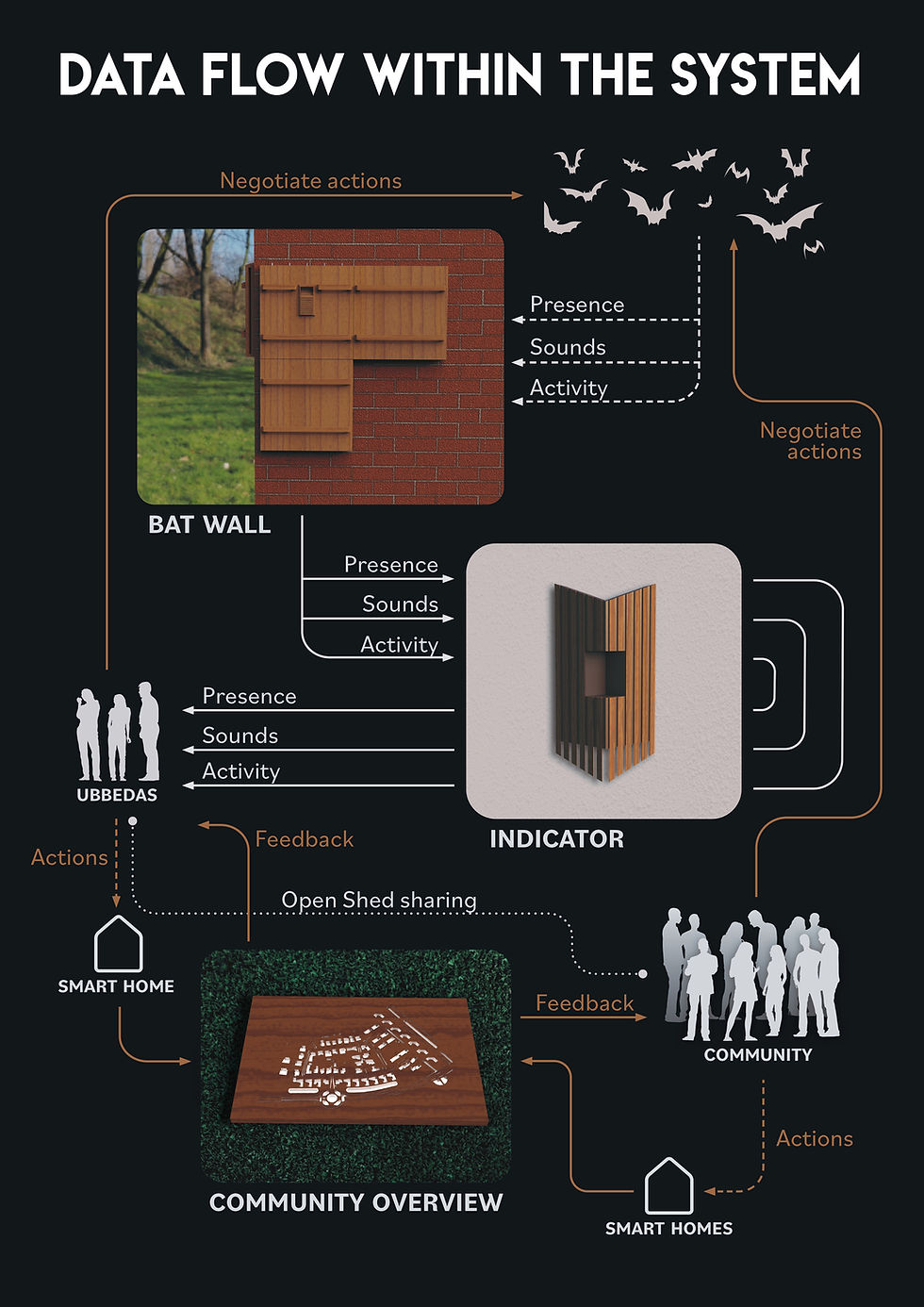
An IoT system designed to support cohabitation between humans and urban bat populations. The system consists of three connected products: a bat wall, an activity indicator, and a community interface.
Through an iterative design process and expert interviews, ethical and practical aspects were considered by adopting a 'More-than-Human' approach.

THE BAT WALL
The bat wall is a modular wooden structure mounted onto the exterior face of a building that provides roosting spaces for bats.
It mimics narrow cavity walls with varying temperatures, allowing bats to move within the structure.
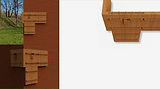
A small entrance opening allows bats to access the interior, while textured grips on the surface help them land and climb into the cavity.
The bat wall also consists of sensors that detect bat activity by sensing movement and transmitting the data to the indicator.
THE INDICATOR
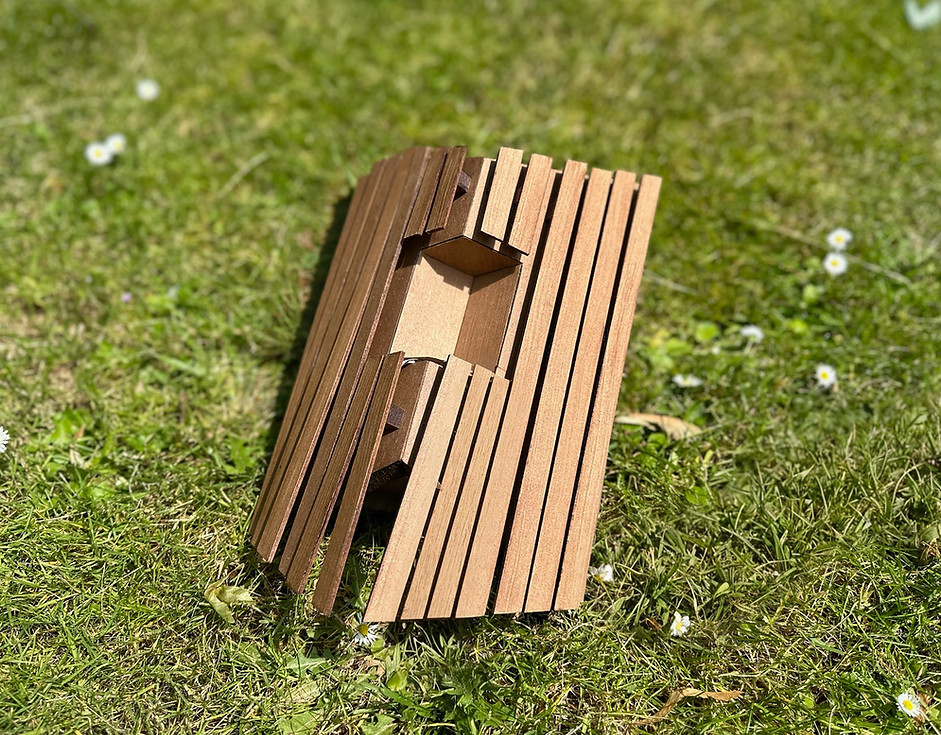
The indicator is a wooden device placed inside the home that reflects activity at the bat wall. It is consists of thin wooden slats that gently quiver when movement is detected, offering a subtle visual cue of bat activity.
This provides a non-intrusive way for residents to be aware of their nocturnal neighbours.
THE COMMUNITY OVERVIEW
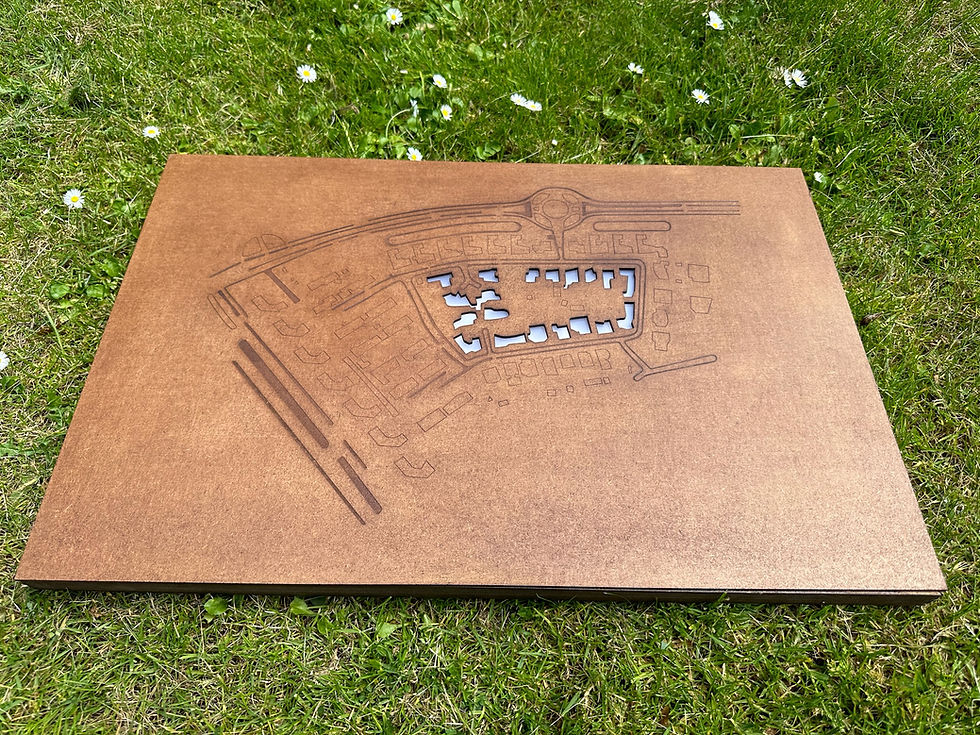
The community overview is a shared neighbourhood interface that visualises environmental factors such as light and noise from surrounding homes.
By showing how these conditions relate to bat activity, it encourages residents to reflect on their actions and discuss how their neighbourhood can better support cohabitation with bats.
bottom of page